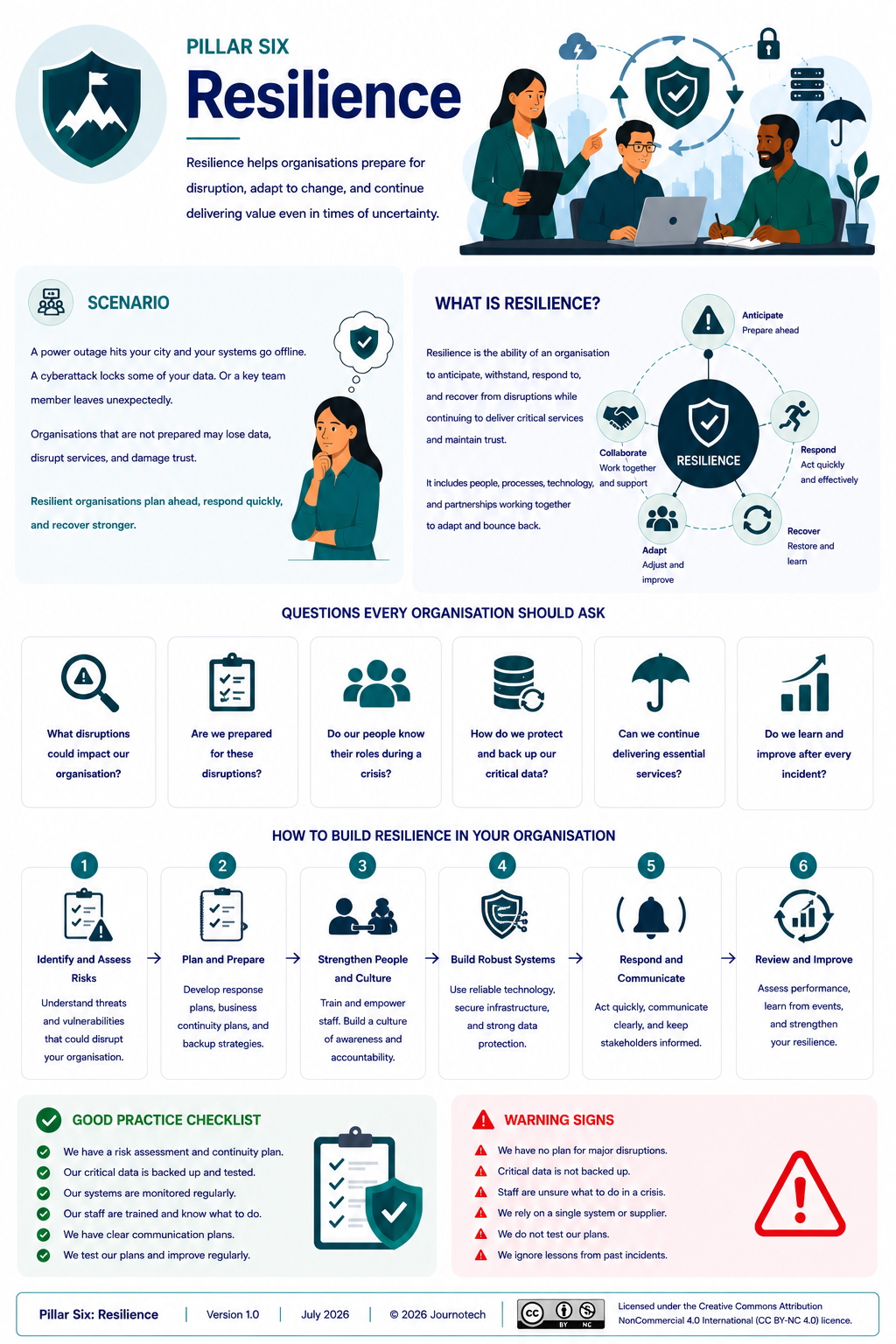


Pillar Six: Resilience
No technology system is immune to disruption. Cyber attacks, system failures, natural disasters, human error, funding constraints, and emerging technologies such as artificial intelligence can all affect an organisation's ability to operate. While security focuses on preventing incidents, resilience ensures that an organisation can continue delivering its essential services, recover quickly when challenges arise, and learn from every disruption.
Building resilience requires more than technical solutions. It depends on strong leadership, clear governance, prepared people, effective communication, and well tested recovery plans. Organisations that invest in resilience are better equipped to respond confidently to unexpected events, minimise disruption, protect public trust, and adapt to an increasingly complex digital environment.
This pillar provides practical guidance for embedding resilience into organisational culture, technology, and decision making. Through real world scenarios, reflective questions, implementation guidance, and practical checklists, organisations can assess their current level of preparedness and identify the steps needed to build a technology function that is capable of anticipating, responding to, recovering from, and continuously learning from disruption.